本網主旨 / The Main purpose of this website
本網主旨
[网路文章转载]
司布真论讲道的目的
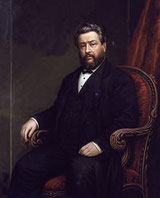
司布真列举了一些这样的真理,其中一些是在他的那个时代遭人禁止讨论,甚至受到攻击的,真是“日光之下无新事!”。那些应当被大大传讲,教导,解释和应用的真理包括有:
a.第一和主要的,就是基督并他钉十字架。“在耶稣被高举的地方, 灵魂就被吸引过来……十字架的道理,在那得救的人却为神的智慧和神的大能。”传讲所有围绕基督的位格和作为而发的真理,特别是罪的邪恶,这使人需要一位救主。要讲得具体:“让他具体去讲,不是肤浅地大体扫罪恶一眼,而是详细提各样的罪,特别是当代盛行的罪。”“解释十诫……像我们的主那样,展现律法的属灵之处,表明邪恶的思念,动机和想象是如何违犯律法的。藉此许多的罪人就会感到扎心……”他引用弗洛克·哈特 (Robbie Flockhart) 的话补充说:“ 除非我们用律法尖锐的针头开路,否则试图用福音的丝线穿刺就是毫无用处。律法行在前面,就像那针,牵引那跟在它后面的福音的线:所以要传关于罪,义,和那将来的审判的事情……对准人心。扎那伤口,触动灵魂的生命所在。”
b.教导人性的败坏。“表明罪不是一件事故,而是他们败坏的心真实的结果…… 这是一条不合潮流的真理;因为今天我们看到牧师对‘人性的尊严’是大大歌功颂德……弟兄们,你们不可落入这样的欺骗,如果你们是这样,你们可以预料,归信的人会寥寥无几。说柔和的预言,为我们失丧光景的邪恶减轻罪过,这并非是带人到耶稣这里来要走的道路。”
c.传讲圣灵神动工的必要性。这是自然跟在前面的教训之后的。“人一定要被告知他们是死的,只有圣灵才能使他们活过来;圣灵按他自己的美意动工,没有人能命令他眷顾自己,声言配得他帮助。人以为这是非常令人感到挫折的教导,确实如此,但是当人用错误的方式寻求得救的时候,他们需要受到挫折。使他们脱离依靠自己能力的欺骗,这是大大帮助他们不再去看自己,而是去看另外一位,就是主耶稣。宣告拯救完全本乎恩典,不是被造之人的权利,而是主权之主的恩赐的拣选教义和其它伟大的真理,都是为了让人脱离骄傲,就这样预备他来接受神的怜悯。”
d.把神的公义,每一样的过犯必然要受到惩罚的事实摆在你们的听众面前。“保罗讲论公义,节制,和将来的审判,使腓力斯甚觉恐惧:今天这些主题同样震撼。如果我们不讲刑罚的威胁,我们就是抢夺了福音的能力。让人担心的是,在这末后的日子危害教会的关于消灭和复原的新奇意见,已经使得许多牧师不愿去讲关于最后的审判,以及它的结果的事情,结果主的威慑对传道人或听众的影响就小了。 如果情况是这样,我们大大痛惜也不为过,因为一个使人归信的伟大手段就这样被放在一旁不加使用了。”
e.要在赎罪祭这个拯救人灵魂的教义上讲得最清楚。 要传讲一个真正的善意的替代的祭,宣告它带来的赦罪。“这是福音渔夫的大网:其它的真理把鱼往正确的方向吸引、驱赶,但这就是这渔网本身。”
f.“如果人要得救,我们就要用最明白的言语传称义是唯独因着信,这是赎罪祭在灵魂的经历中变为有效的方法……称义是唯独因着信,这决不可是含糊的,然而并非所有的人都在这一点上讲得清楚。”
g.热切传讲在基督里神的爱,尊荣主浩大的怜悯;但总要和他的公义连在一起传讲。“不要用人太经常用的方法来高举爱这单一个属性……因为神若不是公义,不恨任何不圣洁的东西,他就不是爱。决不要 以 牺 牲 另 外 一 个 属 性 的 方 法 来 高 举 一 样 属性……神真正的品格是用来让罪人生发敬畏, 打动罪人,使罪人降卑的:小心不要误传了你的主。”“所有这些和其它完全福音体系的真理,都是为了领人来相信;所以把它们作为你主要教导的事。”
节选自 Jonathan Watson 著《司布真论讲道的目的》
中文来自 基督徒的家园 www.jdtjy.org, 特此多谢能转载
The Main purpose of this website
[Network article reprint]
Spurgeon On The Goal of Preaching
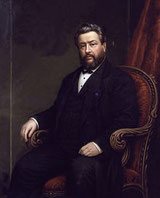
By Jonathan Watson - General Editor of the Banner of Truth
For C. H. Spurgeon it was an axiom that God sends preachers into the world so that sinners may be reconciled to him. Admittedly, there may be some notable exceptions to this rule (e.g. Noah and Jeremiah), but for the most part, God has ordained the preaching of the gospel for the purpose of saving the hearers.
When King Agrippa asked the Apostle Paul, ‘In a short time would you persuade me to become a Christian?’, Paul’s reply gave vent to the spirit in which the true evangelist must always preach the gospel: ‘Whether short or long, I would to God that not only you but also all who hear me this day might become such as I am – except for these chains.’ The Apostle’s clear aim in bearing witness to Christ before kings and their subjects was the conversion of all who were present with him.
Do you preach with the same clear aim? What exactly is your intention? What would you have God do? The conversion of one or two, a mere handful, perhaps, of your hearers? Or do you climb the pulpit steps praying, ‘would to God that every single one of my hearers may be converted through the means of this sermon’?
C. H. Spurgeon was truly apostolic in this respect, as in many others. He considered this such an important element in true preaching that he devoted one whole lecture to it during his Friday afternoon visits to The Pastors’ College, of which he was the President.
In ‘On Conversion as our Aim’, he clearly sets before his students their great goal: ‘The grand object of the Christian ministry is the glory of God . . .Our great object . . . is, however, to be mainly achieved by the winning of souls. If we do not, our cry should be that of Rachel, “Give me children, or I die.”
If we do not win souls, we should mourn as the husbandman who sees no harvest, as the fisherman who returns to his cottage with an empty net, or as the huntsman who has in vain roamed over hill and dale. Ours should be Isaiah’s language uttered with many a sigh and groan – “Who hath believed our report? And to whom is the arm of the Lord revealed?” The ambassadors of peace should not cease to weep bitterly until sinners weep for their sins.’
For Spurgeon this was the great foundational truth, and having established it, he then turned his attention to the practical steps preachers must take if they are to be the instruments in God’s hands for the conversion of men and women. What is the preacher to do who longs to see sinners converted? Here is the considered counsel of an experienced soul winner.
1. Depend entirely upon the Spirit of God and look to him for power over the minds of men.
This is absolutely necessary because conversion is a divine work. ‘Often as this remark is repeated, I fear that we too little feel its force; for if we were more truly sensible of our need of the Spirit of God, should we not study more in dependence upon his teaching? Should we not pray more importunately to be anointed with his sacred unction? Should we not in preaching give more scope for his operation? Do we not fail in many of our efforts, because we practically, though not doctrinally, ignore the Holy Ghost? His place as God is on the throne, and in all our enterprises he must be first, midst, and end: we are instruments in his hand and nothing more.’
2. Give prominent place in your preaching to those truths which are most likely to lead to conversions.
Spurgeon names a number of these (several of which were being soft-pedalled or even attacked in his time – ‘there is nothing new under the sun’!). Doctrines which ought to be prominently preached, taught, explained, and applied, include:
a. First and foremost Christ and him crucified. ‘Where Jesus is exalted souls are attracted . . . The preaching of the cross is to them that are saved the wisdom of God and the power of God.’ Preach all those doctrines which cluster around the person and work of Christ – the evil of sin especially, which created the need of a Saviour. Be specific: ‘Let him go into particulars, not superficially glancing at evil in the gross, but mentioning various sins in detail, especially those most current at the time.’ ‘Explain the ten commandments . . . open up the spirituality of the law as our Lord did, and show how it is broken by evil thoughts, intents and imaginations. By this means many sinners will be pricked in their hearts . . .’ Quoting Robbie Flockhart, he adds: ‘It is of no use trying to pierce with the silken thread of the gospel unless we pierce a way for it with the sharp needle of the law. The law goes first, like the needle, and draws the gospel thread after it: therefore preach concerning sin, righteousness, and judgment to come . . . Aim at the heart. Probe the wound and touch the very quick of the soul.’
b. Teach the depravity of human nature. ‘Show that sin is not an accident but the genuine outcome of their corrupt hearts . . . It is an unfashionable truth; for nowadays ministers are to be found who are very fine upon “the dignity of human nature” . . . Brethren, you will not fall into this delusion, or, if you do, you may expect few conversions. To prophesy smooth things, and to extenuate the evil of our lost estate, is not the way to lead men to Jesus.’
c. Preach the necessity for the Holy Ghost’s divine operations. This will follow on as a matter of course from the previous doctrine. ‘Men must be told that they are dead, and that only the Holy Spirit can quicken them; that the Spirit works according to his own good pleasure, and that no man can claim his visitations or deserve his aid. This is thought to be very discouraging teaching, and so it is, but men need to be discouraged when they are seeking salvation in a wrong manner. To put them out of conceit of their own abilities is a great help toward bringing them to look out of self to another, even the Lord Jesus. The doctrine of election and other great truths which declare salvation to be all of grace, and to be, not the right of the creature, but the gift of the Sovereign Lord, are all calculated to hide pride from man, and so prepare him to receive the mercy of God.’
d. Set before your hearers God’s justice and the certainty that every transgression will be punished. ‘Paul preached of righteousness, temperance, and judgment to come, and made Felix tremble: these themes are equally powerful now. We rob the gospel of its power if we leave out the threatenings of punishment. It is to be feared that the novel opinions upon annihilation and restoration which have afflicted the church in these last days have caused many ministers to be slow to speak concerning the last judgment and its issues, and consequently the terrors of the Lord have had small influence upon either preachers or hearers. If this be so it cannot be too much regretted, for one great means of conversion is thus left unused.’
e. Be most of all clear on the soul-saving doctrine of the atonement. Preach a real bona fide substitutionary sacrifice, and proclaim pardon as its result. ‘This is the great net of gospel fishermen: the fish are drawn or driven in the right direction by other truths, but this is the net itself.’
f. ‘If men are to be saved we must in plainest terms preach justification by faith alone, as the method by which the atonement becomes effectual in the soul’s experience . . . Justification by faith alone must never be obscured, and yet all are not clear upon it.’
g. Preach earnestly the love of God in Christ, and magnify the abounding mercy of the Lord; but always preach it in connection with his justice. ‘Do not extol the single attribute of love in the method too generally followed . . . for God were not love if he were not just, and did not hate every unholy thing. Never exalt one attribute at the expense of another . . . The true character of God is fitted to awe, impress, and humble the sinner: be careful not to misrepresent your Lord.’
‘All these truths and others which complete the evangelical system are calculated to lead men to faith; therefore make them the staple of your teaching.’
3. If we are anxious to see souls saved, we must not only preach the truths which are likely to lead to their conversion, but we must also use modes of handling these truths which are appropriate for securing that end.
a. Instruct: sinners are saved out of darkness; shine the light of God’s truth into their eyes – ‘the entrance of they word giveth light.’ Instruction must precede exhortation. ‘I fear that some of our orthodox brethren have been prejudiced against the free invitations of the gospel by hearing the raw, undigested harangues of revivalist speakers whose heads are loosely put together. The best way to preach sinners to Christ is to preach Christ to sinners. Exhortations, entreaties, and beseechings, if not accompanied with sound doctrine, are like firing off powder without shot. You may shout, and weep, and plead, but you cannot lead men to believe what they have not heard, nor to receive a truth which has never been set before them.’
b. Appeal to the understanding. ‘True religion is as logical as if it were not emotional . . .Of carnal reasoning we would have none, but of fair, honest pondering, considering, judging, and arguing the more the better.’
c. Plead with sinners by way of emotional persuasion. ‘A man known to be godly and devout, and felt to be large-hearted and self-sacrificing, has a power in his very person, and his advice and recommendation carry weight because of his character; but when he comes to plead and persuade, even to tears, his influence is wonderful, and God the Holy Spirit yokes it into his service. Brethren we must plead. Entreaties and beseechings must blend with our instructions. Any and every appeal which will reach the consciences and move men to fly to Jesus we must perpetually employ, if by any means we may save some. But always do this in absolute sincerity; affectation is despicable.
d. Be careful to vary your tone – at times you need to threaten, at times to invite. ‘Let the two methods be set side by side as to practical result, and it will be seen that those who never exhort sinners are seldom winners of souls to any great extent, but they maintain their churches by converts from other systems.’
4. Think carefully about the times when you address the unconverted. More commonsense is needed in this matter. Don’t always address the unconverted at the same point in every sermon – ‘Why give men notice to buckle on their harness so as to repel our attack?’ Use the element of surprise; apply the truth and plead with them when least expected, or when their attention is awakened. Vary your services and don’t always speak to the saints in the morning and sinners in the evening – avoid falling into an evangelical rut. But never close a sermon without a word for the unbeliever. Think also about what season is best to wage a war against the unconverted. For Spurgeon, the winter month of February he found very useful for special evangelistic efforts.
5. Among the important elements in the promotion of conversions are the preacher’s own tone, temper and spirit in preaching.
a. Don’t be dull and monotonous – yes, it’s possible that God may choose to bless such preaching, but in all probability he will not.
b. Guard against a hard, unfeeling spirit in preaching. ‘Great hearts are the main qualifications for great preachers, and we must cultivate our affections to that end.’ But don’t let love degenerate into effeminate religious cant.
c. Preach believingly, always expecting the Lord who has sent you to bless his own word – ‘this will give us a quiet confidence which will forbid petulance, rashness, and weariness.’
d. ‘Preach very solemnly, for it is a weighty business, but let your matter be lively and pleasing, for this will prevent solemnity from souring into dreariness.’
e. Aim for conversions, expect them and prepare for them. ‘Resolve that your hearers shall either yield to your Lord or be without excuse, and that this shall be the immediate result of the sermon now in hand . . . Impressed with a sense of their danger, give the ungodly no rest in their sins; knock again and again at the door of their hearts, and knock as for life and death. Your solicitude, your earnestness, your anxiety, your travailing in birth for them God will bless to their arousing. God works mightily by this instrumentality.’
6. In addition to earnest preaching it will be wise to use other means. These may include:
a. Pastoral visitation – make yourself available to and converse with all your people
b. Special meetings for the awakened and anxious with a view to further instruction, prayer, and the sharing of testimonies by recent converts. But he adds a caution here: ‘There must be no persuading to make a profession, but there should be every opportunity for so doing, and no stumbling-block placed in the way of hopeful minds.’ ‘Doubts may be cleared away, errors rectified, and terrors dispelled by a few moments’ conversation’
c. ‘Seek out the wandering sheep one by one, and when you find all your thoughts needed for a single individual, do not grudge your labour, for your Lord in his parable represents the good shepherd as bringing home his lost sheep, not in a flock, but one at a time upon his shoulders, and rejoicing to do so.’
d. ‘Call in every now and then a warm-hearted neighbour, utilize the talent in the church itself, and procure the services of some eminent soul-winner, and this may, in God’s hands, break up the hard soil for you, and bring you brighter days.’
‘In fine, beloved brethren, by any means, by all means, labour to glorify God by conversions, and rest not till your heart’s desire is fulfilled.’